Four Countries Now, Houthis Next
The Plumb Line
Tuesday, July 21
Four.
That's the number of countries where Iranian-linked strikes have now hit US military targets, the New York Times confirmed this morning. Yesterday this brief tracked 17 American service members killed since the conflict began. Overnight, the Financial Times put a wider dimension on the running toll: nearly 100 US troops have been injured in the two weeks since the Iran war resumed. The death count is the grief metric. The wounded count is the tempo metric. The four-country count is the strategic-expansion metric. All three have moved since yesterday.
The parallel track is equally real and equally underreported. Trump is preparing to meet Lebanese President Joseph Aoun, and Lebanese army units have already begun deploying — physically, on the ground — into a village previously held by Israeli forces, under a new ceasefire framework. War spreading across four countries. A peace deal threading its way through a fifth. Both are live simultaneously, and they are not as contradictory as they look.
Four Countries Now, Houthis Next
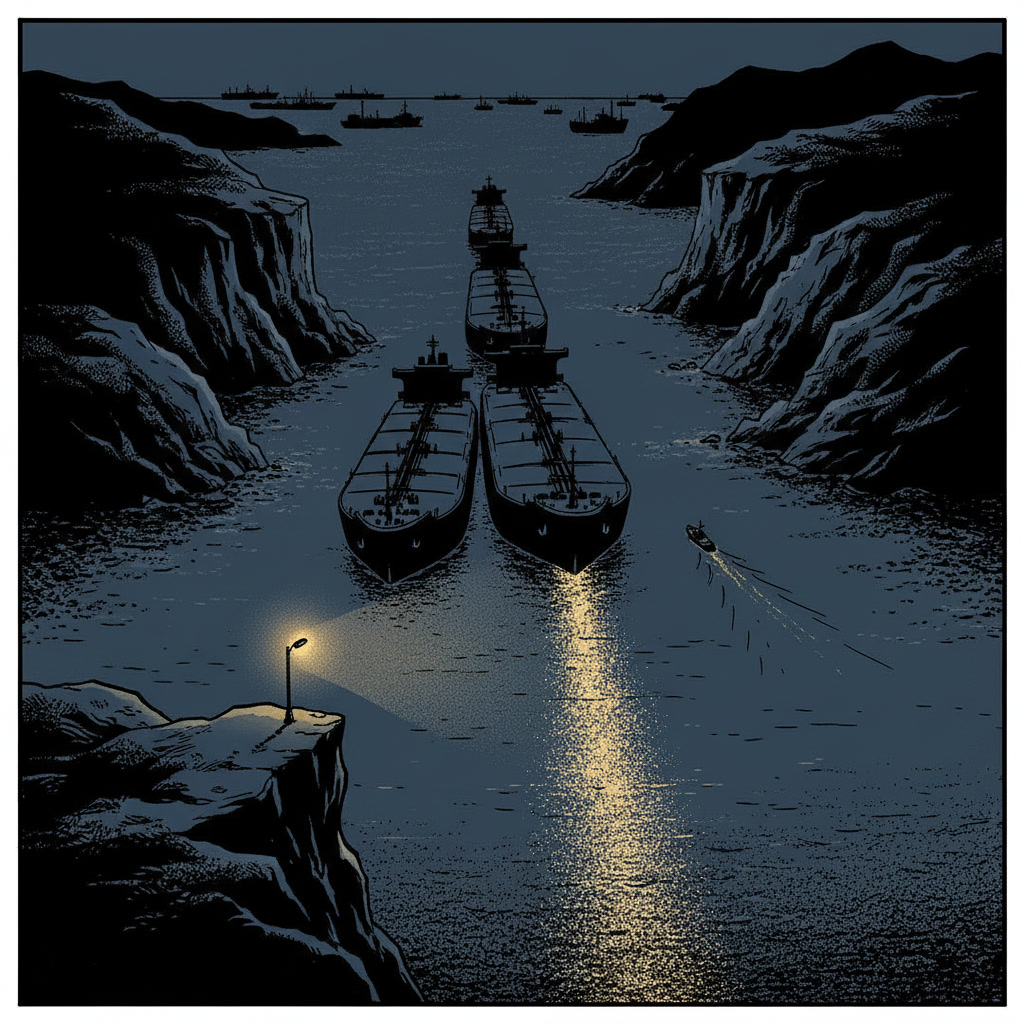
Iranian forces have struck US military personnel in at least four countries since the conflict resumed, the New York Times confirmed Tuesday. The FT's overnight accounting of nearly 100 American service members injured in the past two weeks puts a cumulative dimension on that spread. Yesterday's brief recorded 17 dead; today the injury count is the signal of how hard this war is actually running. Separately, Yemen's Houthis are now edging toward formal entry into the conflict, the New York Times reported — a move that would open a second maritime chokepoint at the Bab el-Mandeb strait, where the Red Sea narrows toward the Gulf of Aden and the Europe-Asia shipping lane runs through.
The read here is that the four-country footprint is not improvised escalation — it is the activation of the full Iranian multi-domain pressure architecture that Tehran has been assembling since roughly 2003. Yesterday's brief correctly identified the tanker-strike mechanism as a replay of the 1987-88 Gulf Tanker War. But today's situation has outgrown that frame. The historical parallel now is the 1982-1990 period: Iran simultaneously backed Hezbollah in Lebanon, armed Kurdish networks against Iraq, maintained Revolutionary Guard operations in Syria, and harassed Gulf shipping — all without triggering an American declaration of war. The mechanism is to distribute violence across enough geographies that no single incident crosses the threshold that forces full US escalation, while the cumulative cost either erodes American will or extracts a negotiated price. Houthi entry would add the Bab el-Mandeb to Hormuz, giving Iran simultaneous leverage over both ends of the energy corridor from the Gulf to Europe. That is not an accident. That is the playbook's next chapter.
The falsification test is specific. If the Houthis formally announce entry before this weekend, the read is that Tehran has concluded the Lebanon peace track — running simultaneously through Trump's meeting with Aoun — is not producing concessions fast enough to justify restraining the second front. If the Houthis hold and the Lebanon talks show movement, the reverse reads: the Houthi threat is diplomatic leverage, not a committed military instrument, and the ceasefire channel is real. Both possibilities are open as of this morning. What I'd watch for next is which resolves first. One is an off-ramp signal. The other is an escalation signal. They look identical until one of them fires.
Three other things worth knowing
Lebanese troops are moving, physically. Under the ceasefire framework Trump is personally advancing through his meeting with President Aoun, Lebanese army units have deployed into a village that Israeli forces previously held, the New York Times confirmed. This is the most concrete diplomatic-military progress the region has produced in weeks, and it is receiving approximately no coverage because a four-country war is consuming all available space. The historical parallel is real: in 1973, Egyptian-Israeli back-channel diplomacy through Henry Kissinger worked alongside active military pressure. In 1982, Reagan tried both tracks in Lebanon and got neither peace nor a favorable withdrawal. The read is that Trump's version is being tested against the same structural problem — whether Iran reads the Lebanon deal as a concession worth accepting or a sign of weakness worth exploiting.
Andy Burnham's first act as Prime Minister generated an immediate funding row. Burnham ordered the elimination of value-added tax on electricity bills Tuesday — a direct pocketbook measure aimed at his working-class base. The Financial Times immediately flagged the fiscal gap: the revenue cost of the cut hasn't been specified. UK wage growth continued cooling this week and unemployment held steady, per the FT's reading of Tuesday's labor data — a stable but stagnant inheritance. Yesterday's brief flagged the North Sea drilling file as his first bilateral test with Washington; today the electricity cut establishes his domestic political signature. The FT noted his cabinet represents a studied break from the Starmer era, with one notable exception: the Treasury. The read here is that the exception is the tell about where his ambitions are constrained.
A Philippine sailor was injured in a direct confrontation with the Chinese coast guard in the South China Sea. The New York Times confirmed the incident Tuesday. Physical injuries to uniformed personnel represent an escalation beyond the water cannons, laser dazzlers, and equipment seizures that have characterized the South China Sea pattern in recent months. The read here is that Beijing is testing how far it can push before the US-Philippines Mutual Defense Treaty becomes a live instrument rather than a theoretical one — and has calibrated this probe for a moment when Washington's attention is fully consumed elsewhere.
Echoes
The four-country spread of Iranian strikes has a specific historical parallel that the policymakers in the room have almost certainly named themselves. In October 1983, Iranian-backed Hezbollah killed 241 US Marines in Beirut. In December 1983, Iranian-aligned networks bombed the US embassy in Kuwait. Violence was distributed across Lebanon, Kuwait, France, and through proxy cells in Europe — all while Iran maintained deniability on specific operations. Reagan withdrew from Lebanon in February 1984, and Iranian strategic planners subsequently identified that withdrawal as proof that distributed, persistent pressure on American forward deployments could produce retreat without crossing the threshold that triggers a full conventional response. Every Iranian planner working today has read that sequence. The 2026 open question is whether Washington's response logic has updated. In 1983, the answer was withdrawal. In 1991, with a different administration and a unified coalition, the answer was war. Today's wires do not yet tell us which of those rooms the current administration is in.
The quiet things
A tropical storm is bearing down on the northern Gulf Coast this morning with minimal wire coverage. Tropical storm warnings are active across the Mississippi Sound, Mobile Bay, the Alabama coast, Baldwin and Mobile counties, and the Pensacola area; storm surge watches have been posted for parts of the coastal Alabama shoreline; tropical storm watches extend east across the Florida Panhandle from Pensacola toward Apalachicola, and the New Orleans weather office posted warnings covering Lake Borgne, Breton Sound, Chandeleur Sound, and Lower Plaquemines Parish. A separate flood watch runs through Wednesday morning for all five New York City boroughs and a swath of northern and central New Jersey extending to the Philadelphia metro. Yesterday's brief noted the Gulf Coast storm watch was getting no coverage. Today it has escalated to formal warnings and surge watches — and is still getting no coverage.
Also quiet: the FT reported Tuesday that Trump is preparing a new tariff announcement as the current 10% across-the-board levies approach their expiration date. On any normal week, an expiring tariff baseline with a new tranche pending is a front-page economic story. This week, it is not.
How I'd act on this
If you follow the Iran conflict, the Houthi status is the sequencing signal to watch this week — more informative than the four-country troop count or the wounded toll in isolation, because Houthi formal entry adds a second maritime chokepoint to the Hormuz pressure. The Trump-Aoun meeting is the simultaneous read: if Lebanese troop deployments hold and the Houthis stay in "edging closer" mode, the ceasefire track is outcompeting the escalation track. If Houthis enter while Lebanon talks continue, Tehran is running both simultaneously and the diplomacy is cover, not resolution.
If you trade energy or fixed income, the tariff expiration is this week's most underpriced event. The FT flagged it; mainstream wires have not. A new tariff tranche announcement hits import costs, consumer prices, and Fed rate-path assumptions in a sequence that plays out over 60 to 90 days. The war risk premium is already in oil. The tariff premium is not yet in rates.
If you cover British politics or UK macro, Burnham's electricity VAT cut and the funding row it immediately generated tells you where his internal constraints lie. The Treasury continuity the FT noted is either a backstop for his fiscal credibility or a ceiling on his policy ambitions — which one becomes visible in the spending review he has not yet announced.
If you follow Ukraine, yesterday's brief flagged intensifying street pressure on General Valery Syrskyi, Ukraine's commander-in-chief. Today the New York Times confirms Zelensky is responding to the protesters — but responding is not acting, and the command decision remains open.
If you are anywhere on the Gulf Coast from New Orleans to Pensacola, the tropical storm bearing down this morning is the story that actually matters to your day, regardless of what the front page says.
Four countries under Iranian fire, Lebanese soldiers walking into a village Israelis just left, a tropical storm running warnings from Lake Borgne to Apalachicola, and a 10% tariff clock running out — all before most readers reached for their phones. If the Houthis enter by Friday, the Lebanon peace track becomes a fig leaf, not a ceasefire.
— *The Plumb Line*. Daily world brief.
Sources
Newswire — US-Iran War / Houthis / Lebanon
- newswire/nyt (live blog, July 21) — "Suspected Iranian strikes have targeted the U.S. military in at least 4 countries," NYT, July 21
- newswire/ft (2e137205) — "Nearly 100 US troops injured in 2 weeks since Iran war resumed," FT, July 21
- newswire/nyt (houthis-yemen-iran-war) — "Houthis in Yemen Edge Closer to Entering U.S.-Iran War," NYT, July 21
- newswire/nyt (iran-united-states-escalation) — "Trump Administration and Iran Officials Risk a Wider War They Cannot Afford," NYT, July 21
- newswire/nyt (iran-war-jordan-us) — "Increased Cooperation With U.S. Has Put Jordan in Iran's Cross Hairs," NYT
- newswire/ft (13092f23) — "Trump to meet Lebanon's president as US pushes ahead with peace deal," FT, July 21
- newswire/nyt (lebanon-israel-ceasefire-plan) — "Lebanese Troops Deploy in Israeli-Held Village Under New Cease-Fire Plan," NYT, July 21
- newswire/ft (7875b77a) — "FirstFT: Trump prepares to meet Lebanon's leader," FT, July 21
Newswire — UK / Burnham
- newswire/nyt (andy-burnham-new-uk-prime-minister-policies) — "New UK Prime Minister Burnham Promises Hope and Change," NYT, July 21
- newswire/nyt (uk-andy-burnham-electricity-tax-vat) — "UK's New Prime Minister Burnham Orders Cut in Taxes on Electricity," NYT, July 21
- newswire/ft (2e017e40) — "Lack of UK jobs growth highlights challenges for Burnham," FT, July 21
- newswire/ft (0423e995) — "UK wage growth continues to cool while unemployment rate steady," FT, July 21
- newswire/ft (35e0aa44) — "A break with the Starmer era — except at the Treasury," FT, July 21
- newswire/ft (7700d94a) — "Burnham move to eliminate VAT on electricity bills sparks funding row," FT, July 21
Newswire — Philippines / South China Sea
- newswire/nyt (philippines-south-china-sea-sailor-injured) — "Philippines Says Sailor Was Injured in Skirmish With Chinese Coast Guard," NYT, July 21
Newswire — Tariffs
- newswire/ft (c31cdab6) — "Trump prepares fresh tariff barrage with 10% levies set to expire," FT, July 21
Newswire — Ukraine
- newswire/nyt (ukraine-zelensky-protests) — "When Protesters Speak, Zelensky Listens, in the Ukrainian Tradition," NYT, July 21
NOAA Alerts — Gulf Coast Tropical Storm
- noaa_alerts/f449d95576e2e94751de7a2df5c349c5f1da404d — Tropical Storm Warning, NWS New Orleans: Mississippi Sound, Lake Borgne, Breton Sound, Chandeleur Sound; July 21
- noaa_alerts/59dffed5cc6827126584f287b9e8fb65a6ee8a78 — Tropical Storm Warning, NWS Mobile AL: North/South Mobile Bay, Mississippi Sound, Perdido Bay, Pensacola-area coastal waters; July 21
- noaa_alerts/e677eec830b50f81340b523f251529d8224521a4 — Tropical Storm Warning + Storm Surge Watch, NWS Mobile AL: Baldwin Coastal, Mobile Coastal, Mobile Central, Baldwin Central; July 21
- noaa_alerts/e225176656d9509c92ab9aebc5c336c6e2b2c01c — Tropical Storm Warning + Watch, NWS Tallahassee FL: Florida Panhandle coastal waters, Mexico Beach to Apalachicola; July 21
- noaa_alerts/88b6a54148d22616b9c5d1ec477b7816a801e340 — Tropical Storm Watch, NWS New Orleans: Coastal Jefferson, Upper Terrebonne, Central Jefferson, Upper/Lower Plaquemines; July 21
NOAA Alerts — Northeast Flood Watch
- noaa_alerts/b85bdb0eb43ef15efd6f20b9a2fd478505f80247 — Flood Watch, NWS Upton NY: NYC (all five boroughs), Passaic, Hudson, Bergen, Essex, Union counties NJ; through July 22
- noaa_alerts/6e799fafc0c5ee1d11dfff598f645b07df6e49c5 — Flood Watch, NWS Mount Holly NJ: Morris, Hunterdon, Somerset, Middlesex, Monmouth, Mercer, Burlington, Camden, Gloucester, Delaware, Philadelphia, Chester, Montgomery, Bucks counties; through July 22