Watch Vienna. The G7 Just Looked Away.
The Plumb Line
Wednesday, June 17
Three things happened since yesterday's brief that initially look unrelated.
The G7 summit at Evian ended with world leaders publicly praising Trump's Iran nuclear framework: NATO Secretary-General Mark Rutte declared it a viable mechanism for blocking Iranian weaponization, and European governments that were publicly skeptical just weeks ago fell into line. At the same moment, Ukraine launched a sustained campaign to choke the supply corridors feeding Russian forces in Crimea — the roads and rail links Moscow has relied on since annexation in 2014 — per the New York Times. And overnight, two rockets lifted from two continents: China's Long March 12 successfully placed its twenty-second SatNet constellation batch into low Earth orbit; SpaceX's Falcon 9 independently delivered a BlueBird communications cluster; two more vehicles — China's Kuaizhou 11 from Jiuquan and Arianespace's Ariane 64 from French Guiana — were counted down within hours of each other; and nine newly cataloged Qianfan satellites joined an orbital band already carrying hundreds of Starlinks.
The read here is that what connects all three is not geography or actor but structure: each contest is being decided in infrastructure and verification, not in the room where the announcement happens. The Iran deal's durability will be determined by whether international inspectors confirm physical access to enrichment sites — not by what was said at a lakeside French conference hall. Ukraine's Crimea campaign will turn on whether supply corridors can be severed before Russian commanders adapt and reroute. The orbital competition's outcome will be set by spectrum rights, collision-avoidance protocols, and regulatory norms that do not yet exist at the speed the buildout requires.
The applause in Evian is real. The questions underneath it are louder.
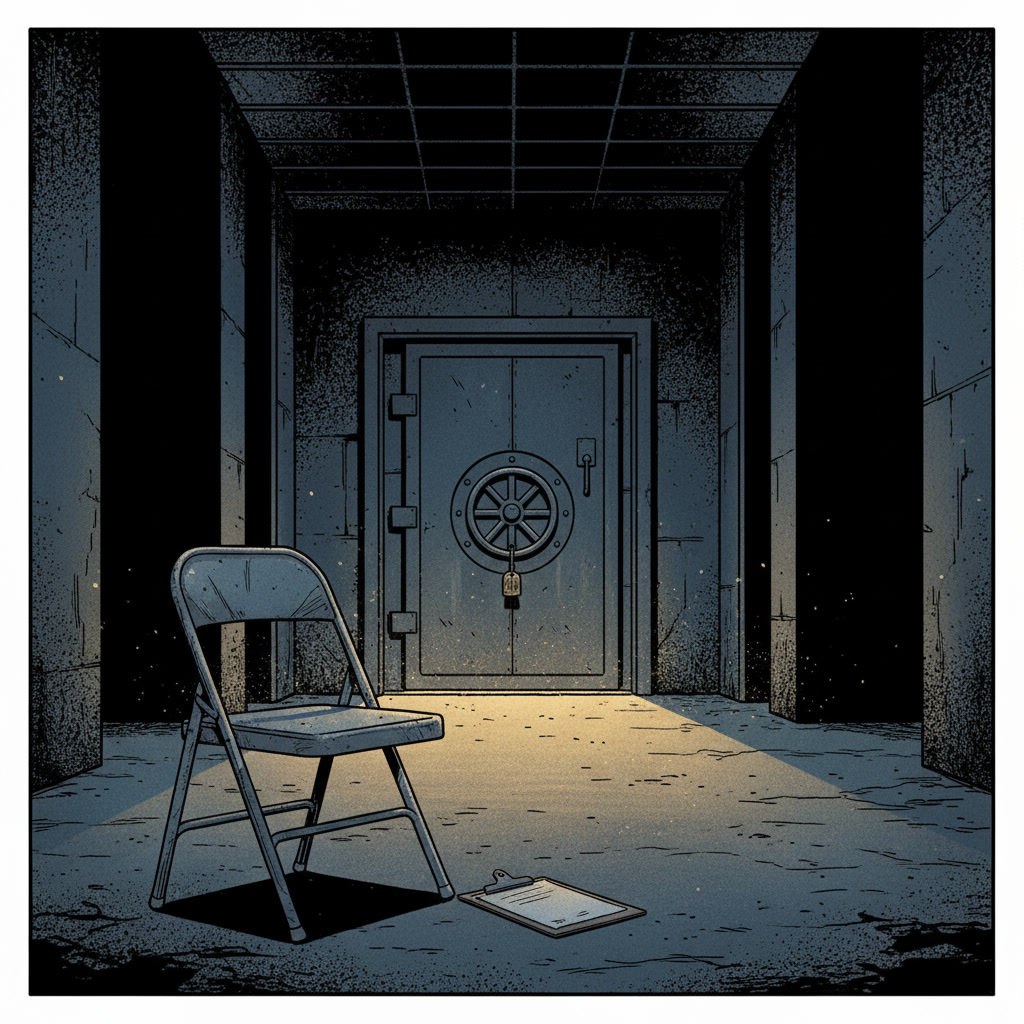
Watch Vienna. The G7 Just Looked Away.
G7 leaders formally endorsed Trump's Iran nuclear framework Tuesday. Rutte led the praise, calling it a plausible mechanism for blocking Iranian weaponization, per Bloomberg. The European governments that had questioned the deal's depth over the previous two weeks offered no further public objection. Bloomberg's own analysis nonetheless found the deal "risks falling short of the Obama version" — specifically on verification depth and implementation speed. The Financial Times reported a growing backlash. Separately, the UAE announced it is moving to reduce its dependence on the Strait of Hormuz to "zero" — a significant hedge from a Gulf capital that rarely speaks in such direct terms about vulnerability. Bloomberg flagged Libya as a potential next target in what it characterized as Trump's oil-focused regional strategy.
Here's the read: since June 14, this brief has named one falsifier — does the International Atomic Energy Agency (IAEA) publicly confirm physical monitoring presence at Iranian enrichment sites before the Strait of Hormuz is formally declared open? That trigger remains unresolved. The IAEA has issued no public statement; no wire service has reported inspector access. What the G7 produced is political validation, not a verification record. The historical parallel is the October 1994 US–North Korea Agreed Framework: both signatories publicly claimed success, international goodwill was real, and the verification architecture was never robustly established while the diplomatic momentum was still available to enforce it. Eight years later, North Korea acknowledged a parallel enrichment program. The reconstruction fund attached to the Iran deal creates genuine incentives for Iranian compliance during the politically sensitive window — the same incentives that make *performing* compliance and *sustaining* it two different things. The read on the UAE's "zero dependency" announcement is that it is a tell: a Gulf state that no longer needs the strait has a structurally different incentive to protect it.
What I'd watch for next: the falsification trigger is unchanged. If the IAEA publicly confirms physical monitoring at enrichment sites before a formal Hormuz-open declaration, this brief upgrades its assessment. If Hormuz is declared open without it, the 1994 analog holds, and what is being celebrated today is the next problem's foundation. Secondary: Saudi Arabia's response — Riyadh has been silent on the framework since the deal was announced, a silence this brief has tracked since June 14. At three days, the read is that this is no longer an information lag; it is a deliberate calculation. The first Gulf capital to speak publicly, and what it says, sets regional terms.
Three other things worth knowing
Ukraine is fighting a logistics war for Crimea. The New York Times reported a sustained Ukrainian campaign to sever the supply routes — roads and rail corridors — feeding Russian forces on the peninsula Russia has held since 2014. The strategic logic is sound: a defended position whose occupying forces cannot be reliably resupplied becomes progressively more untenable. This is not an operation designed for immediate headlines; its effects will show up in Russian operational capacity over weeks, not overnight. The read is that Ukrainian commanders are playing a longer game on the peninsula than the daily exchange rate suggests.
A Russian Navy ship fired warning shots at a British civilian yacht in the English Channel. The New York Times confirmed the incident, which occurred in international waters. The couple aboard were British nationals; the Russian vessel fired to enforce what it described as a security perimeter. The incident carries no direct military consequence, but read alongside NATO's decision to reinforce Turkey's air defenses with Italian SAMP/T (Sol-Air Moyenne Portée/Terrestre) surface-to-air missile batteries — confirmed by Bloomberg — the read here is that an alliance is managing simultaneous pressure on its northwestern and southeastern flanks. Those two data points are not coincidental.
A tropical system is threatening the Gulf Coast. The National Weather Service issued Tropical Storm Warnings for offshore waters from High Island to Freeport, Texas and Tropical Storm Watches for Galveston Island, the Bolivar Peninsula, and Coastal Brazoria — all active this morning. Flood conditions are already running across coastal Louisiana, with warnings in Vernon, St. Tammany, East Baton Rouge, and St. Helena parishes extending through June 19. Iowa and Illinois are simultaneously under flood watch and severe thunderstorm conditions. The read here is that the compound nature of this pattern — a Gulf coastal system and a Midwest convective outbreak at the same time — makes the infrastructure and agriculture consequences more significant than either system in isolation.
Echoes
The orbital activity this week has a specific historical frame worth placing. In 1964, the United States anchored the formation of INTELSAT, the International Telecommunications Satellite consortium, as the governing body for global commercial satellite communications. The Soviet Union responded in 1971 with Intersputnik, its own parallel system, serving a different bloc of nations. The two ran simultaneously for decades, dividing orbital slots, duplicating infrastructure, and producing two parallel regulatory regimes where a single sufficiently governed system could, in principle, have existed. Neither disappeared; each became the foundation of its alliance's communications architecture for a generation.
The historical parallel is that what is overhead today rhymes with that template but runs faster and involves private capital alongside sovereign intent. SpaceX's Starlink and China's Qianfan are building at comparable pace in overlapping orbital bands, and Arianespace is lifting Amazon's constellation in a third lane. The Outer Space Treaty of 1967 was written for two sovereign actors and was deliberately vague on commercial operations. The lesson the INTELSAT–Intersputnik competition offers is not that parallel systems are inherently unstable — they ran for thirty years — but that the coalition that establishes spectrum allocation norms, collision-avoidance protocols, and orbital slot priority first will impose those norms on everyone who comes later. That window, in 1964, was narrow and was not fully used. The window now is narrower, and nine more Chinese satellites joined the band last night.
The quiet things
The IAEA has still issued no public statement confirming physical monitoring access to Iranian enrichment sites. That was the most consequential silence in yesterday's coverage and remains so today. The read here is that the G7's endorsement amplifies rather than closes the gap: the political window for demanding verification before celebrating completion has now effectively shut.
Saudi Arabia has still not issued a formal public response to the Iran nuclear framework. This brief has flagged that silence since June 14. The read is that three days is no longer an information lag — it is a deliberate hold. Every Gulf capital is reading Riyadh's pause as carefully as any wire service.
The Bank of Japan has gone eight consecutive days without a public statement on Governor Kazuo Ueda's condition or policy succession. Yen carry-trade positions continue to price continuity by inference alone. Day eight.
The Siberian fire cluster northwest of Krasnoyarsk — tracked in this brief since June 14 — continues registering peak fire radiative power above 350 megawatts per satellite pass in NASA monitoring data this morning. The read is that persistent permafrost fires at this scale generate carbon feedback effects that outlast the fire season. No major international wire is covering it.
How I'd act on this
If you follow the Iran file — the IAEA statement remains the single data point that changes the analysis. The G7's praise does not substitute for it. Until that confirmation appears publicly, you are reading political theater, not a verification record. The falsifier named in this brief on June 14 has not fired in either direction.
If you hold energy positions tied to the Persian Gulf — the UAE's announcement of moving toward zero Hormuz dependency deserves more analytical weight than diplomatic rhetoric usually earns. A Gulf state that no longer needs the strait has a structurally different incentive to defend it. That belongs in your residual-risk model.
If you cover NATO or European security — the Russian Channel incident and the SAMP/T deployment in Turkey are not separate stories. Read them together as simultaneous pressure on the alliance's northwestern and southeastern flanks. Watch whether NATO produces a formal statement on the Channel incident in the next 48 hours; the presence or absence of that response is the institutional read.
If you track US intelligence and national security appointments — Trump's decision to delay Jay Clayton's confirmation hearing as director of national intelligence is not a routine scheduling matter. Clayton is a financial regulator being placed atop the intelligence community; the read here is that a delay at the precise moment the Iran deal is moving toward implementation raises the question of who is managing US intelligence continuity during the gap, and why this week.
If you are in coastal Texas, coastal Louisiana, or the Iowa and Illinois flood corridors — Tropical Storm Warnings are active offshore, flood conditions are multi-day across several parishes, and federal disaster declarations follow river crests, not initial storm coverage. Watch the 24-hour gauge numbers.
Three tracks ran simultaneously today: a celebrated Iran framework without a confirmed inspection record, a logistics siege of Crimea that will decide more than any drone exchange, and nine Chinese satellites added overnight to an orbital band that has no governing treaty adequate to what it is becoming.
What was praised in Evian will be verified — or won't — in a building in Tehran that no international inspector has yet publicly entered.
— *The Plumb Line*. Daily world brief.
Sources
Iran / G7 / Hormuz
- newswire/nyt — "Live Updates: G7 Leaders Praise Trump for U.S.-Iran Deal," June 17
- newswire/bloomberg — "Trump's Iran Nuclear Deal Risks Falling Short of Obama Version," June 17
- newswire/bloomberg — "NATO Chief Says Trump Deal Can Help Stop Iran From Getting Nuclear Weapon," June 17
- newswire/ft — "FirstFT: Trump faces backlash over Iran deal," June 17
- newswire/bloomberg — "UAE Moves to Cut Dependency on Strait of Hormuz to 'Zero'," June 17
- newswire/bloomberg — "Libya May Be Next in Oil-Fueled Trump Strategy," June 17
Ukraine / Russia
- newswire/nyt — "Ukraine Tries to Cut Off Crimea, Choking Russian Supply Routes," June 17
- newswire/nyt — "Russian Navy Ship Fired Warning Shots Near British Couple's Yacht," June 17 (dateline June 16)
- newswire/bloomberg — "NATO to Boost Air Defenses in Turkey With Italian SAMP/T System," June 17
US intelligence / appointments
- newswire/ft — "Trump delays confirmation hearing of former SEC head Jay Clayton as US intelligence chief," June 17
- newswire/bloomberg — "Trump Says Nomination of US Intel Director Should Be Delayed," June 17
Gulf Coast weather
- noaa_alerts — Tropical Storm Warning: NWS Houston/Galveston TX, offshore waters High Island to Freeport TX out 20 NM, June 17
- noaa_alerts — Tropical Storm Watch: NWS Houston/Galveston TX, Galveston Island; Bolivar Peninsula; Coastal Brazoria, June 17
- noaa_alerts — Coastal Flood Warning: NWS Houston/Galveston TX, Bolivar Peninsula, June 17
- noaa_alerts — Flood Warning: NWS New Orleans LA, East Baton Rouge / St. Helena / St. Tammany / Vernon parishes LA, June 17
- noaa_alerts — Flash Flood Warning: NWS Houston/Galveston TX, Brazoria County TX, June 17
Space / orbital
- launch_library/756a042f — Long March 12, SatNet LEO Group 22, Launch Successful, Wenchang, June 17
- launch_library/c3f48f48 — Falcon 9 Block 5, BlueBird Block 2 #3–5, Launch Successful, Cape Canaveral, June 17
- launch_library/ed8ccd18 — Ariane 64, Amazon LEO LE-03, Go for Launch, French Guiana, June 17
- launch_library/cf655887 — Kuaizhou 11, Go for Launch, Jiuquan, June 17
- celestrak/69383–69399 — QIANFAN-166 through QIANFAN-172, QIANFAN-181, QIANFAN-182 (nine satellites), cataloged June 17
Historical references
- INTELSAT founding agreements, August 1964; Intersputnik established November 1971
- Outer Space Treaty, entered into force October 1967
- US–North Korea Agreed Framework, October 1994; North Korean parallel enrichment acknowledgment, October 2002
- The Plumb Line, June 14–16 — IAEA falsifier named; Saudi silence tracked since June 14; Bank of Japan continuity gap flagged (now day 8); Siberian fire cluster tracked since June 14
Siberian fires
- nasa_firms — Multiple detections at 59.0°–59.9°N, 85.0°–90.8°E; peak single-pass fire radiative power 388 MW; June 17
UK
- newswire/ft — "UK inflation unexpectedly holds steady at 2.8% in May," June 17