How Long Does an Iran Deal Last?
The Plumb Line
Friday, June 19
Three things happened in the last 24 hours that belong in the same sentence even though no wire service ran them in the same section. Israel launched airstrikes into Lebanon after four soldiers were killed on its northern border. Iran cited those strikes to postpone the follow-on nuclear talks that were supposed to build on the framework Trump signed Thursday morning. And in Britain, Andy Burnham won the Makerfield by-election by a margin wide enough to reopen the question of whether Keir Starmer ends this Parliament as prime minister.
The Iran thread and the British thread share one structural property: what looked stable on Wednesday is measurably less stable this morning. The read here is that the Lebanon escalation didn't kill the Iran deal — but it handed Tehran a reason to slow the implementation phase, which is where the actual constraints live. That gap between the announced framework and the enforced one is where deals go to die.
How Long Does an Iran Deal Last?
Israel launched airstrikes on Lebanon yesterday after four soldiers were killed on its northern border — the deadliest single-day toll on Israel's Lebanon front in months. Iran's government, citing the Israeli strikes, announced it was postponing the follow-on nuclear talks with the United States scheduled to begin working through the 60-day implementation calendar from the framework signed Thursday. Separately, the Financial Times confirmed that the signed deal includes Iran receiving access to $6 billion in frozen funds to purchase American goods. The talks are paused. The money provision stands.
Here's the read. Tehran has a well-established playbook for managing US diplomatic pressure: accept the headline agreement, then use external provocations — real or cited — to slow the implementation phase where the actual constraints live. Iran did not walk away from the framework. It postponed a meeting. Those are different things, but the direction is telling. The 60-day clock was always the moment of maximum exposure for Tehran — the phase where enrichment commitments, inspection schedules, and sanctions-relief sequencing get pinned down in specifics rather than principles. Citing Lebanon gives Tehran cover to decelerate that clock while collecting the economic benefits the signing already unlocked. The Financial Times' own analysis today is blunt: reaching a durable deal with Iran in 2026 will be harder than 2015 was, not easier. The read here is that Iran's first move after signing confirms the concern.
What I'd watch for next: if Iran sets a specific new date for follow-on talks within the next week, the postponement was tactical — domestic signal, minor pressure play. If no date materializes by June 26, the talks are in structural trouble, and the framework starts to look more like an announcement than an agreement. The falsifier this brief named on June 14 remains active: a statement from the International Atomic Energy Agency (IAEA) confirming physical monitoring access at Iranian enrichment sites in the next ten days would mean the framework has verification behind it. Five days since the G7 endorsed the deal; one day since it was formally signed. The IAEA has still not issued that statement.
Three other things worth knowing
Burnham wins Makerfield; Starmer's position deteriorates overnight. Andy Burnham, Greater Manchester's mayor, won the Makerfield by-election with a margin that Bloomberg, the FT, and the Times all describe as clearing a direct path to a Labour leadership challenge. Starmer has vowed to defend his position. Reform UK — Nigel Farage's party — described its Makerfield performance as "abysmal," a notable reversal from recent by-election momentum. Scottish Nationalists lost their seat in a separate contest, following a money scandal. What Thursday night produced: a Labour civil war signal, a Reform setback, and Scottish independence politics further destabilized — three UK variables moving simultaneously in directions that none of the major parties fully controls.
Russia's central bank chief is publicly absent, with no explanation. The Financial Times flagged this morning that Russia's central bank governor has disappeared from public view, with nothing offered by the Kremlin or the bank to account for it. The read here: in a wartime economy running well above peacetime inflation levels, central bank independence is not a peripheral question — it is the instrument that keeps war finance from becoming war inflation. Yesterday's brief tracked the Bank of Japan going nine consecutive days without a statement on Governor Ueda; Russia's situation is structurally different and potentially more consequential. An unexplained absence at the head of the institution managing the ruble surfaces institutional stress before it becomes market stress. Worth watching.
Ukraine's Moscow strike is being assessed, not celebrated. The New York Times' framing this morning — "'Game Changer'? Too Soon to Tell" — matches the read in yesterday's brief precisely. Ukraine demonstrated reach; it has not demonstrated resolution. The 48-hour falsifier named yesterday remains open: if Russia responds with a major infrastructure strike on Kyiv before Saturday, Kyiv miscalculated the threshold. If Moscow's response stays measured or absent, the pressure point holds, and Kyiv will press it again.
Echoes
The historical parallel here is not the 2015 nuclear deal but the Oslo Accords of September 1993. PLO and Israel signed Oslo while Hamas and Islamic Jihad immediately ran a campaign of attacks specifically designed to collapse the framework before it could be implemented. The critical variable was not the attacks themselves — it was whether the signatories chose to absorb the pressure and continue. Yasser Arafat did not cite Hamas bombings as a reason to pause Oslo negotiations; he managed the internal pressure while talks proceeded. Tehran citing Israeli strikes on Lebanon as a reason to postpone US talks is a different choice — it uses the regional escalation as a negotiating instrument rather than absorbing it and proceeding. Oslo's lesson is not that outside spoilers always win. It is that the signatories' willingness to proceed despite them is the determining variable, and that willingness shows up in scheduling decisions, not statements. The question for the Iran framework is the same one it was for Oslo in late 1993: does Tehran want this deal enough to keep meeting through the noise?
The quiet things
The Siberian fire cluster northwest of Krasnoyarsk is in its sixth consecutive day of elevated satellite detection. NASA data shows multiple high-confidence heat sources at 59°–63°N with fire radiative power peaking above 394 megawatts on today's passes — the highest readings in this sequence since tracking began June 14. No major wire service has picked it up.
A SpaceX Falcon 9 carrying a classified National Reconnaissance Office (NRO) satellite — NROL-179 — launched from Vandenberg Space Force Base this morning. The same overnight catalog added two new objects from China's Guowang constellation, the state-backed broadband network competing directly with Starlink. Guowang is China's answer to Starlink's dual-use communications dominance, and its constellation is expanding in parallel with the American one, largely without the press coverage that accompanies each SpaceX flight. The read here: low-Earth orbit is getting crowded in ways the treaty architecture governing it was not designed to manage.
How I'd act on this
If you follow the Iran file — the $6 billion funds provision is unlocked; the follow-on talks are not. Those are moving in opposite directions. The IAEA statement is the operational line between a deal with verification and a framework with intentions. Watch for it in the next ten days; the early post-signing window is historically when agencies either confirm access or go conspicuously quiet.
If you cover UK politics or hold sterling-denominated assets — Burnham winning Makerfield shifts the question from whether Starmer faces a challenge to when, and on what terms. The next move is Burnham's: does he seek a Westminster seat to formalize a leadership path, or maneuver through party machinery from outside? His next scheduling decision is the story.
If you hold energy positions tied to Middle Eastern supply routes — the read here is that the Lebanon escalation is the variable that could reopen Hormuz risk. The supertankers that cleared the strait yesterday moved on the assumption that the Iran deal holds. A deteriorating deal changes the insurance math. Watch the re-pricing of tanker routes over the next 48 hours as the market digests the postponed talks.
If you're in Mississippi, Alabama, Louisiana, or along the Iowa–Illinois river corridor — flood warnings in some counties run through June 22. Clarke County, Mississippi has been under warning since June 17. River gauges are the relevant instrument at this stage of a multi-day event, not rainfall forecasts.
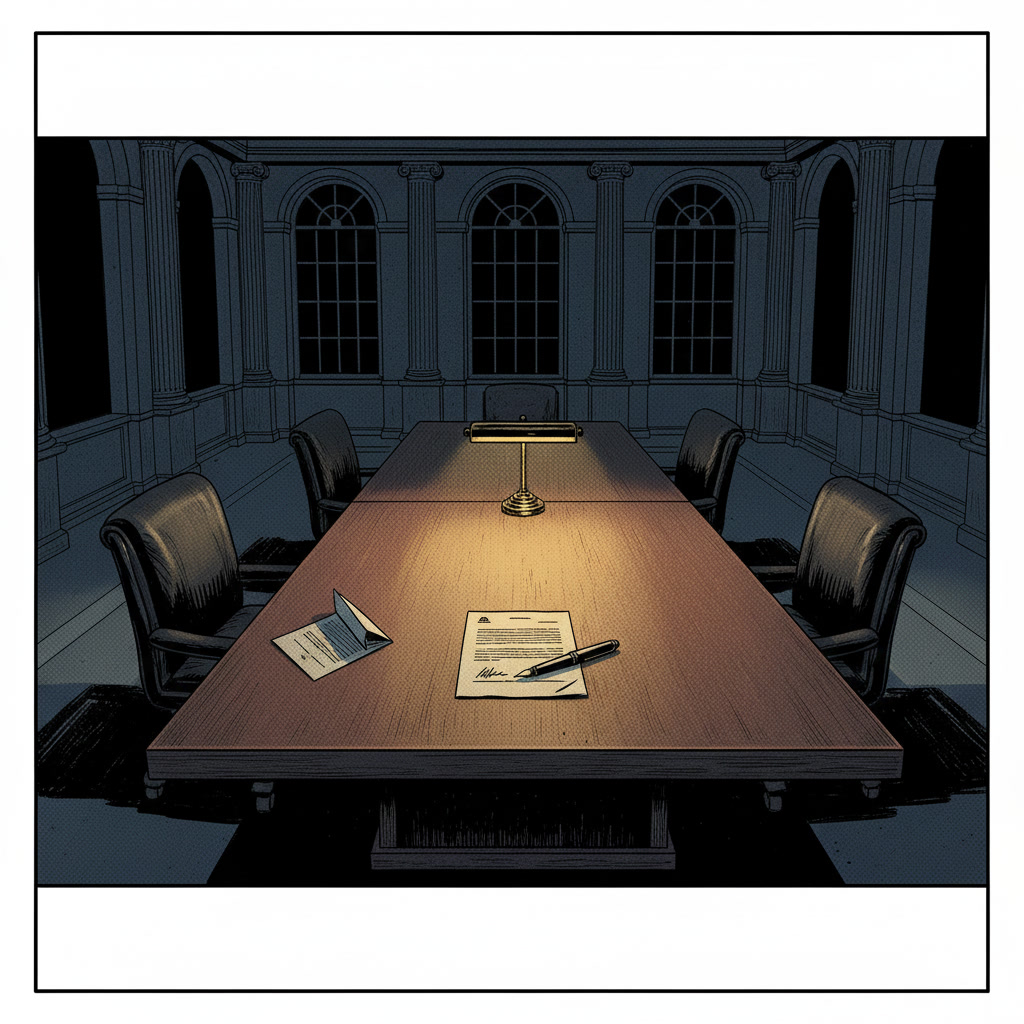
The ink dried on the Iran framework Thursday morning; by Friday, Israel was bombing Lebanon and Tehran had called off the next meeting.
The IAEA hasn't said a word.
— *The Plumb Line*. Daily world brief.
Sources
Iran / Lebanon / Nuclear deal
- newswire/ft — "Iran postponed US talks due to Israeli strikes on Lebanon, diplomats say," June 19
- newswire/nyt — "Mideast Live Updates: Attacks in Lebanon and Delay in Talks Test U.S.-Iran Deal," June 19
- newswire/nyt — "Israel Launches Airstrikes in Lebanon After 4 Soldiers Are Killed," June 19
- newswire/ft — "Iran to get access to $6bn of frozen funds to buy US goods," June 19
- newswire/ft — "Reaching a nuclear deal with Iran will be much harder than in 2015," June 19
UK Politics
- newswire/nyt — "Burnham Wins Makerfield By-Election, Clearing Path to Challenge Starmer as UK Prime Minister," June 19
- newswire/ft — "Burnham storms to by-election victory in challenge to Starmer," June 19
- newswire/ft — "'Abysmal': Farage's Reform UK suffers another by-election blow," June 19
- newswire/bloomberg — "Scottish Nationalists Beaten in By-Election After Money Scandal," June 19
- newswire/bloomberg — "What It Would Take for Labour to Replace Keir Starmer," June 19
Russia / Ukraine
- newswire/ft — "Russia's absent central bank chief," June 19
- newswire/nyt — "'Game Changer'? Too Soon to Tell. But Ukraine Flexed in Striking Moscow," June 19
Space
- launch_library/5d4099bf-a0be-4f54-b236-b6ab3aed4146 — Falcon 9 Block 5 | NROL-179 | Vandenberg SFB, CA | status: Launch in Flight, June 19
- celestrak/69574 — GUOWANG OBJECT C, cataloged June 19
- celestrak/69576 — GUOWANG OBJECT E, cataloged June 19
Siberian fires
- nasa_firms — Multiple high-confidence detections at 59°–63°N, 90°E; peak fire radiative power 394 MW; June 19
Flooding
- noaa_alerts — Flood Warning: NWS Jackson MS, Clarke County MS through June 22
- noaa_alerts — Flood Warning: NWS Mobile AL / NWS New Orleans LA, Baldwin AL, Escambia FL, Harrison MS through June 21–22
- noaa_alerts — Flood Warning: NWS Quad Cities IA IL, Johnson/Louisa/Washington IA through June 20
- noaa_alerts — Flood Watch: NWS Jackson MS, multiple Mississippi and Louisiana parishes/counties, June 19
Federal contracting / cybersecurity
- nvd_cve/CVE-2026-54103 — GAO Electronic Protest Docketing System (EPDS), authentication bypass, disclosed June 18
- nvd_cve/CVE-2026-54104 — GAO EPDS / CBCA Electronic Docketing System, privilege escalation via client-controlled role parameter, disclosed June 18
Historical references
- Oslo Accords, September 13, 1993 — PLO-Israel framework; spoiler pressure from Hamas and Islamic Jihad in implementation phase
- 2015 JCPOA implementation phase — verification gap between announced terms and verified execution
- The Plumb Line, June 14–18 — IAEA falsifier named June 14; Siberian fire cluster tracked from June 14; Ukraine Moscow strike analyzed June 18; Russia central bank and Bank of Japan absence noted June 18; supertanker Hormuz crossing reported June 18